Concrete Blocks vs Bricks for Construction in Peshawar | Mohas Consultants
Admin
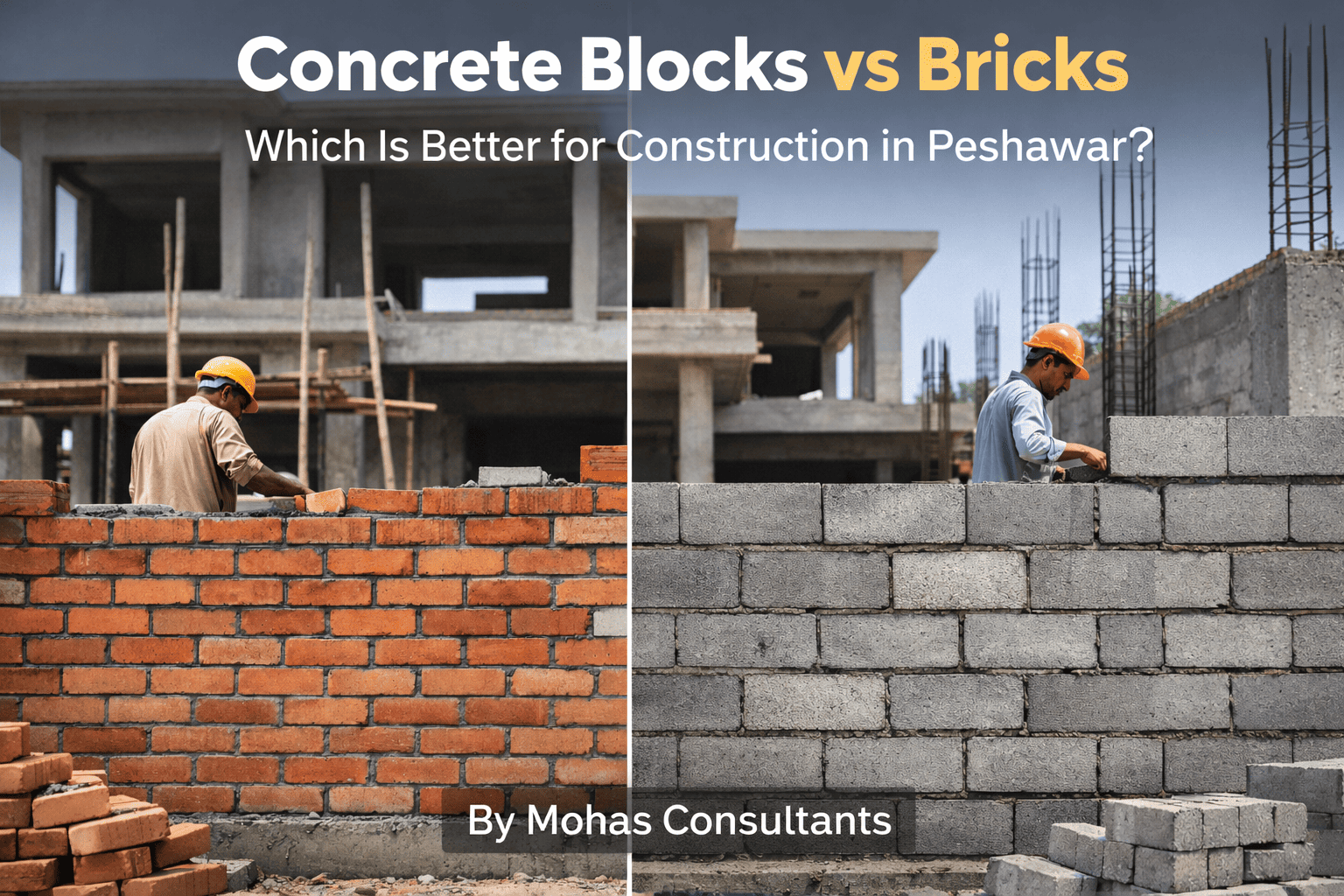
Concrete Blocks vs Bricks: Which Is Better for Construction in Peshawar? | Mohas Consultants
Introduction
Choosing the right construction material is one of the most important decisions when building a home or commercial property. In cities like Peshawar, where climate conditions, cost considerations, and durability play significant roles, homeowners and developers often face a common question: Should you use concrete blocks or traditional bricks?
Both materials have been widely used in construction across Pakistan, but each offers unique advantages depending on the project requirements. At Mohas Consultants, we help clients make informed decisions by analyzing structural performance, cost efficiency, climate suitability, and long-term sustainability.
This guide compares concrete blocks and bricks in the context of construction in Peshawar to help you understand which option may be better for your project.
Understanding Brick Construction
Bricks have been the most traditional and commonly used construction material in Pakistan for decades. Made primarily from clay and fired in kilns, bricks are known for their strength and familiarity in local construction practices.
Advantages of Bricks
1. Proven Durability
Brick structures have stood the test of time and can last for decades when properly constructed.
2. Good Thermal Mass
Bricks absorb heat during the day and release it slowly, helping regulate indoor temperatures.
3. Skilled Labor Availability
Most construction workers in Pakistan are highly experienced with brick masonry, making construction easier to manage.
4. Traditional Aesthetic Appeal
Bricks offer a classic architectural look that many homeowners prefer.
Limitations of Bricks
However, bricks also come with certain drawbacks:
-
Construction is generally slower due to smaller unit size.
-
Higher mortar usage increases material consumption.
-
Uneven quality from traditional kilns can affect durability.
-
Clay brick production contributes to environmental pollution.
Understanding Concrete Block Construction
Concrete blocks (often called CMU – Concrete Masonry Units) are becoming increasingly popular in modern construction projects across Pakistan.
Made from cement, sand, and aggregates, concrete blocks are larger than bricks and offer advantages in speed and structural efficiency.
Advantages of Concrete Blocks
1. Faster Construction
Because blocks are larger, fewer units are needed, significantly speeding up the building process.
2. Better Structural Strength
Concrete blocks often provide stronger load-bearing capacity for multi-story buildings.
3. Improved Thermal Insulation
Hollow concrete blocks can provide better insulation when properly designed.
4. Reduced Mortar Consumption
Fewer joints mean less mortar is required, which can lower construction costs.
5. Environmentally Friendly Option
Concrete blocks can be manufactured with lower environmental impact compared to traditional brick kilns.
Limitations of Concrete Blocks
Despite these benefits, concrete blocks also have some challenges:
-
Higher initial material cost compared to bricks.
-
Skilled labor for block masonry may be less common in some areas.
-
Finishing may require additional plastering for smooth surfaces.
Concrete Blocks vs Bricks: Key Comparison
| Feature | Bricks | Concrete Blocks |
|---|---|---|
| Construction Speed | Slower | Faster |
| Cost | Lower material cost | Slightly higher material cost |
| Structural Strength | Moderate | Higher |
| Thermal Performance | Good thermal mass | Better insulation potential |
| Mortar Usage | High | Low |
| Environmental Impact | Higher due to brick kilns | Lower impact |
| Wall Weight | Heavier | Lighter |
Which Material Works Better in Peshawar’s Climate?
Peshawar experiences hot summers and mild winters, making thermal performance an important factor in building design.
-
Brick walls provide good thermal mass and are widely used in residential construction.
-
Concrete blocks, especially hollow blocks, can offer better insulation and improved energy efficiency when combined with proper architectural design.
For modern homes focused on energy efficiency and faster construction, concrete blocks are gaining popularity. However, bricks remain a reliable and widely accepted option.
Expert Recommendation from Mohas Consultants
The choice between bricks and concrete blocks ultimately depends on several factors:
-
Project budget
-
Structural requirements
-
Construction timeline
-
Energy efficiency goals
-
Availability of skilled labor
At Mohas Consultants, we evaluate each project individually to recommend the most suitable material for structural performance, climate responsiveness, and cost efficiency.
Conclusion
Both bricks and concrete blocks have their strengths in construction. While bricks continue to dominate traditional building practices in Pakistan, concrete blocks are increasingly being adopted in modern architecture due to their speed, structural advantages, and sustainability.
Choosing the right material is not only about cost — it’s about ensuring long-term durability, comfort, and building performance.
Call to Action
Planning to build a home or commercial project in Peshawar?
Mohas Consultants provides expert architectural design, material selection guidance, and climate-responsive building solutions tailored to your project.
📞 Contact Mohas Consultants today for professional architectural consultation.
Related Articles

Client Education & Guides
Top Architects in Peshawar: Increase Your Property Value | Mohas Consultants
Feb 28, 2026

Client Education & Guides
Before You Build: 10 Essential Tips for Homeowners | Mohas Consultants
Feb 28, 2026
Client Education & Guides
Architect vs Builder: Roles & Differences | Mohas Consultants
Feb 28, 2026