Climate-Based Design Solutions for Pakistani Homes | Mohas Consultants
Admin
Introduction
Designing homes in Pakistan requires careful consideration of the country’s diverse climate zones—from the hot, arid regions of Sindh and Balochistan to the cooler, mountainous areas of the north. Climate-responsive architecture ensures that homes remain comfortable, energy-efficient, and environmentally friendly throughout the year.
In this guide, we’ll explore practical strategies for designing homes in Pakistan that adapt to local climate conditions, reduce energy consumption, and improve occupant comfort.
1. Understanding Pakistan’s Climate Zones
Pakistan has three main climate zones, each requiring different architectural strategies:
-
Hot & Arid (e.g., Sindh, Balochistan): High temperatures, low rainfall.
-
Hot & Humid (e.g., Coastal Karachi): Warm, humid climate with sea breezes.
-
Temperate / Cold (e.g., Northern Pakistan): Cooler temperatures with snowfall in winter.
Tip: Identify your home’s climate zone to implement effective design solutions.
2. Passive Design Strategies
Passive design reduces energy use and maximizes comfort by using natural forces like sunlight and wind:
-
Building Orientation: Position homes to minimize heat gain in hot regions and capture sunlight in cooler areas.
-
Natural Ventilation: Incorporate windows, courtyards, and ventilated roofs for airflow.
-
Shading: Use overhangs, pergolas, and vegetation to block direct sunlight in hot climates.
-
Thermal Mass: Thick walls and stone floors absorb heat during the day and release it at night.
3. Material Selection for Climate
Choosing the right materials is key to climate-responsive design:
-
Hot & Arid Regions: Light-colored, reflective materials like mud bricks, insulated concrete, or stone to reduce heat absorption.
-
Hot & Humid Regions: Moisture-resistant materials such as treated wood, concrete, or stone to prevent mold and deterioration.
-
Temperate / Cold Regions: High-insulation materials such as bricks, insulated panels, and double-glazed windows to retain heat.
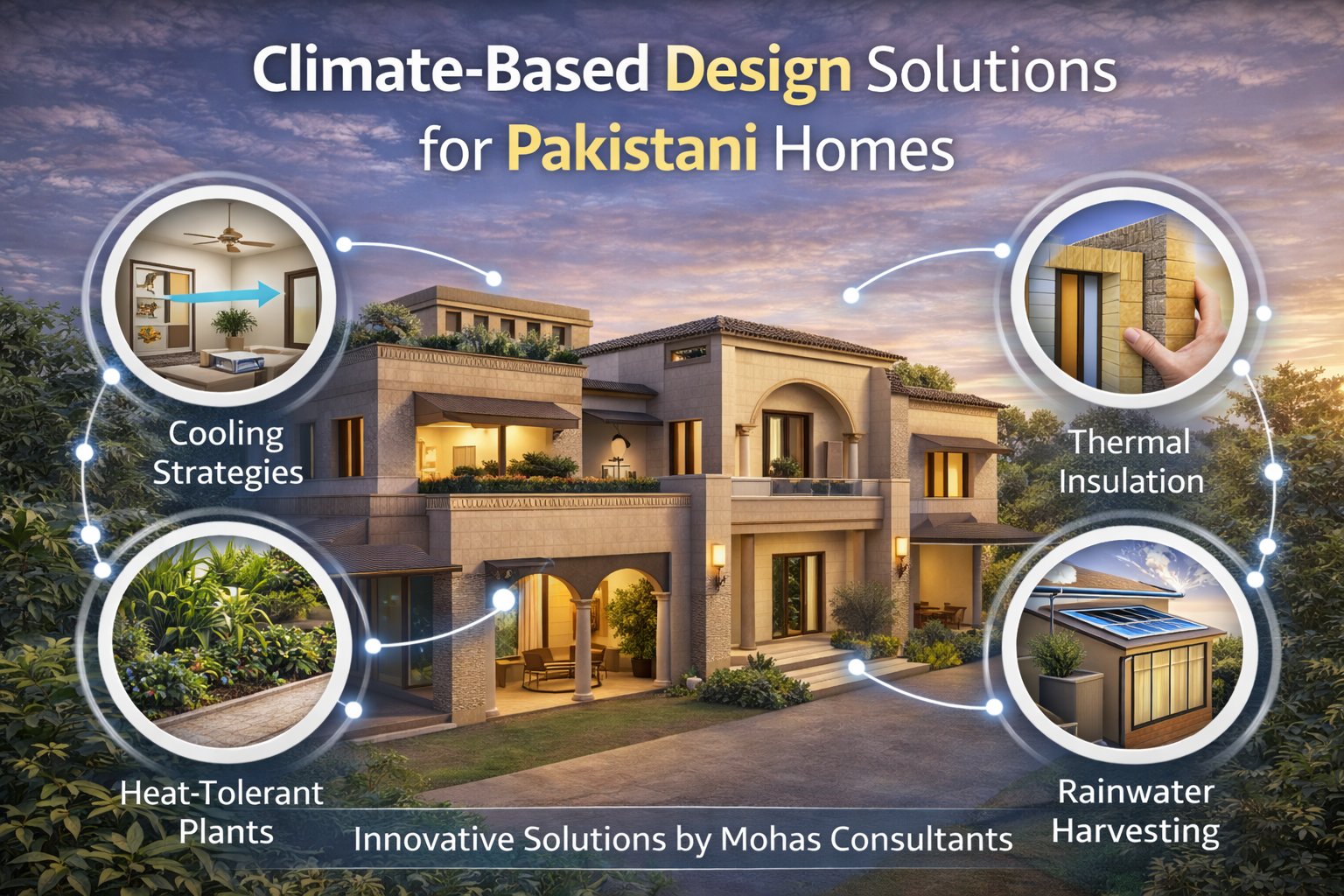
4. Roof & Insulation Solutions
-
Cool Roofs / Reflective Coatings: Reduce heat absorption in hot climates.
-
Green Roofs: Improve insulation, reduce energy use, and create sustainable outdoor spaces.
-
Proper Insulation: Walls and roofs should be insulated to maintain indoor temperature year-round.
5. Energy Efficiency & Sustainable Practices
-
Maximize daylight with strategic window placement and skylights.
-
Use energy-efficient lighting and appliances throughout the home.
-
Install solar panels for electricity and water heating.
-
Implement rainwater harvesting and greywater recycling for irrigation and non-potable water use.
6. Landscape & Outdoor Design
-
Plant native trees and shrubs to provide shade and cooling.
-
Design courtyards and terraces to enhance airflow in hot regions.
-
Use permeable surfaces for walkways and patios to reduce heat retention and improve drainage.
7. Common Mistakes to Avoid
-
Ignoring local climate when designing the building.
-
Using heavy, heat-absorbing materials in hot regions.
-
Overlooking natural ventilation and daylight.
-
Failing to insulate roofs and walls appropriately.
Conclusion
Climate-based design is crucial for building homes that are comfortable, energy-efficient, and environmentally sustainable in Pakistan. By considering local climate zones, implementing passive design strategies, selecting appropriate materials, and incorporating sustainable technologies, architects and homeowners can create homes that adapt perfectly to their environment.
Call-to-Action (CTA):
"Looking to design a climate-responsive home in Pakistan? Contact Mohas Consultants today for expert guidance on sustainable and energy-efficient architecture solutions."