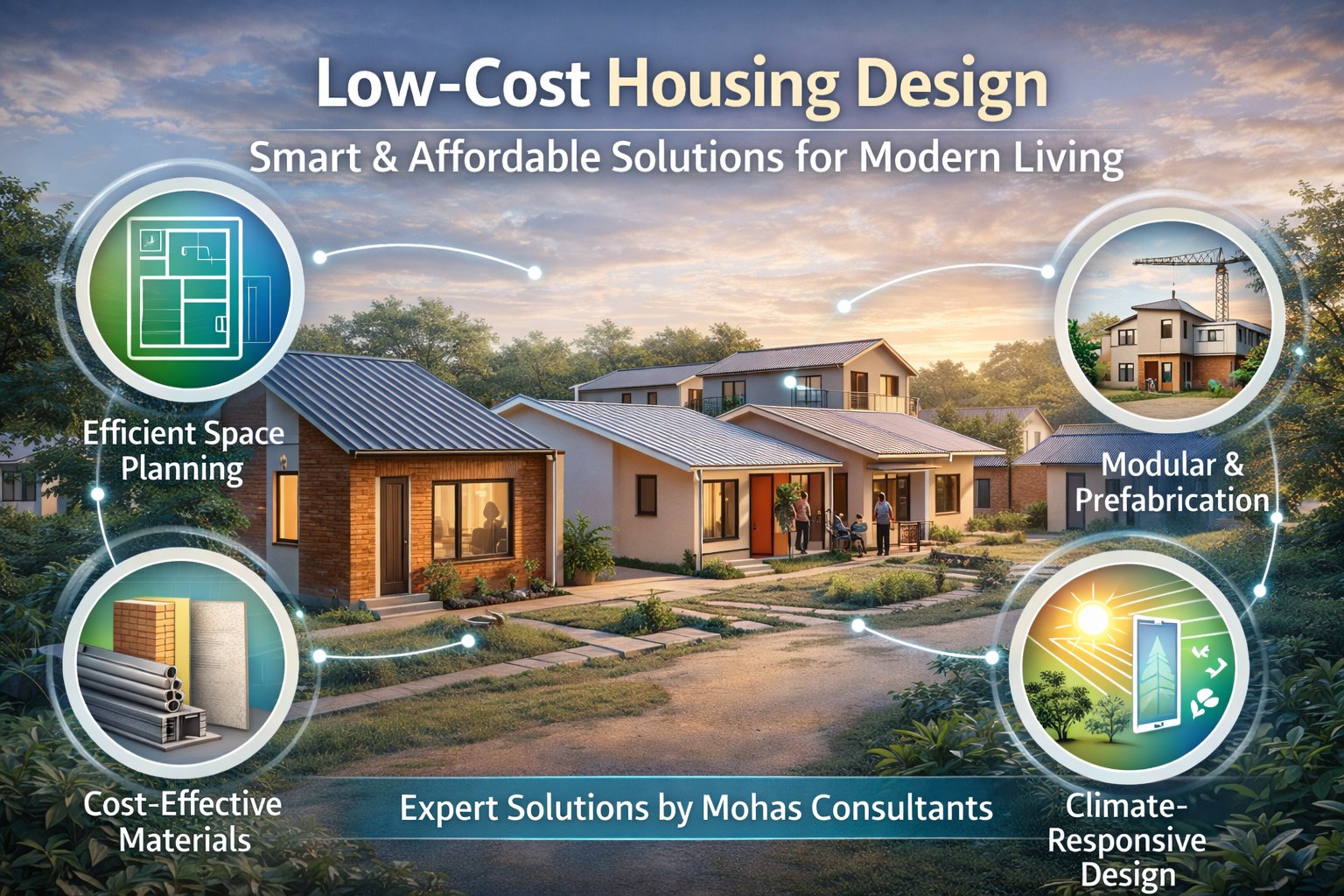
Energy-Efficient House Planning in Pakistan | Mohas Consultants
Admin
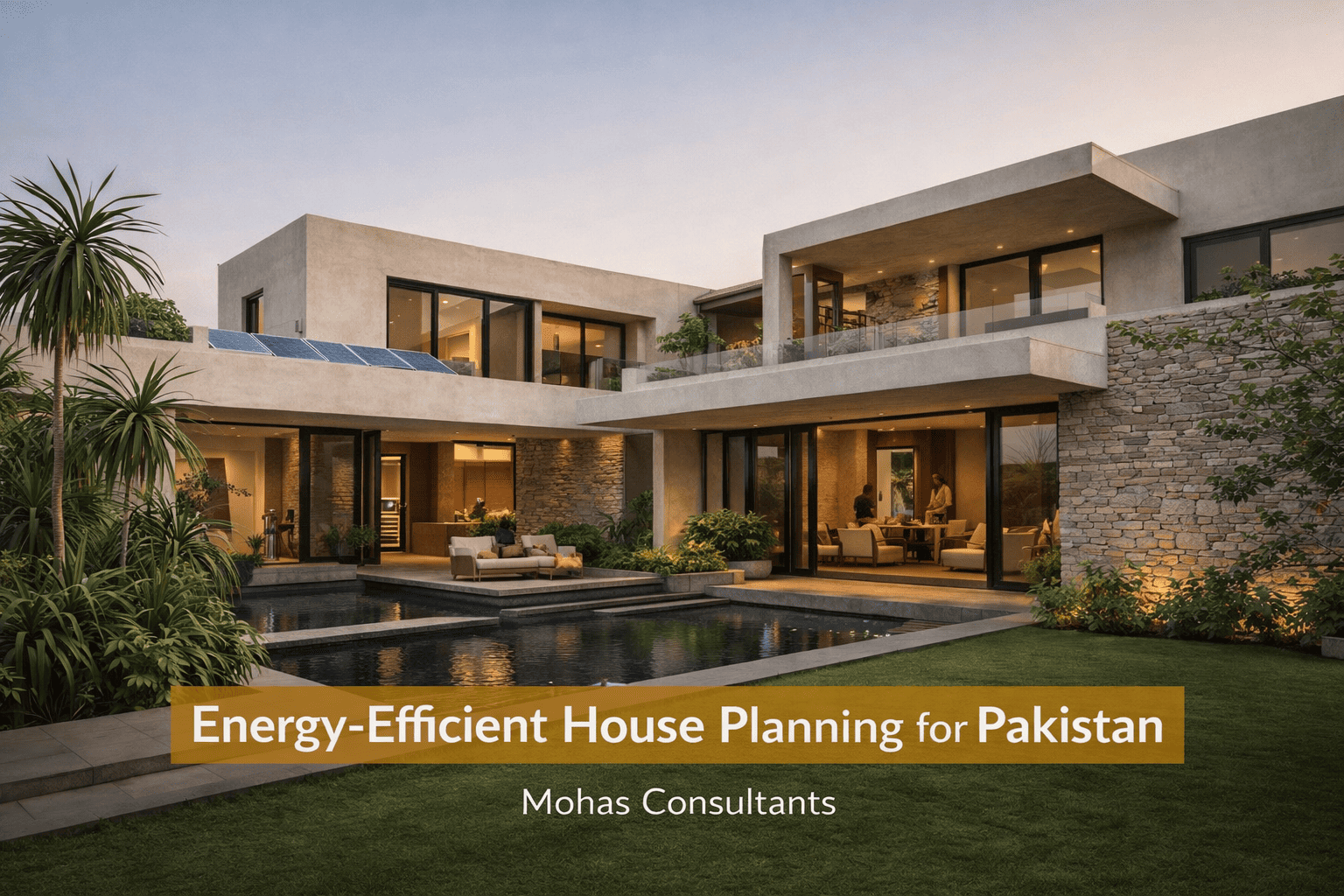
Energy-Efficient House Planning | Mohas Consultants
Intro
With rising energy costs, increasing environmental concerns, and extreme climate conditions in Pakistan, energy-efficient house planning has become a necessity rather than a luxury. Smart architectural design can significantly reduce electricity consumption, improve indoor comfort, and enhance long-term sustainability.
At Mohas Consultants, we specialize in designing climate-responsive, energy-efficient homes that balance comfort, functionality, and aesthetics. Through intelligent planning strategies, material selection, and passive design techniques, we help homeowners achieve maximum efficiency with minimal operational costs.
Problem
Traditional house designs in hot climates often result in:
-
Excessive indoor heat
-
High air-conditioning dependency
-
Increased electricity bills
-
Poor ventilation
-
Uncomfortable living environments
Most residential buildings are designed without considering sun orientation, airflow, thermal mass, and insulation, leading to inefficient energy performance. As a result, homeowners face rising energy expenses and reduced indoor comfort.
Solution
Energy-efficient house planning focuses on minimizing energy use while maximizing comfort. At Mohas Consultants, we apply proven architectural strategies such as:
-
Climate-responsive design orientation
-
Passive cooling techniques
-
Natural ventilation planning
-
Thermal insulation systems
-
Daylighting optimization
-
Sustainable material selection
These strategies reduce reliance on mechanical cooling systems and significantly improve indoor thermal comfort.
Visual Examples
Here are some practical architectural design elements used in energy-efficient house planning:
1. Central Courtyard Design
Enhances cross ventilation, promotes airflow, and lowers indoor temperatures naturally.
2. Shaded Facades & Overhangs
Protect building surfaces from direct sunlight, reducing heat gain.
3. Strategic Window Placement
Allows natural daylight and ventilation without excessive heat penetration.
4. Green Landscaping & Vertical Gardens
Reduces surrounding temperature and improves microclimate conditions.
5. High Thermal Mass Materials
Brick, concrete, and stone regulate temperature by storing and releasing heat gradually.
Tips for Energy-Efficient House Planning
If you are planning to build or renovate your home, consider these expert tips:
-
Orient the house to minimize direct sun exposure
-
Design shaded outdoor spaces and verandas
-
Use cross-ventilation techniques
-
Incorporate thermal insulation in roofs and walls
-
Select energy-efficient windows and glazing
-
Install solar panels and rainwater harvesting systems
-
Use light-colored exterior finishes to reflect heat
Conclusion
Energy-efficient house planning is an intelligent investment that enhances comfort, reduces environmental impact, and delivers long-term financial savings. With smart architectural decisions, homeowners can significantly lower their carbon footprint while enjoying a healthier living environment.
At Mohas Consultants, we are committed to delivering sustainable, energy-efficient, and climate-responsive architectural solutions tailored to Pakistan’s diverse climate zones.
CTA – Start Your Energy-Efficient Home Today
Planning your dream home?
Let Mohas Consultants design a high-performance, energy-efficient house that combines sustainability, innovation, and comfort.
📞 Contact us today for a professional consultation