How Lighting Can Transform Your Home Interior | Mohas Consultants
Admin
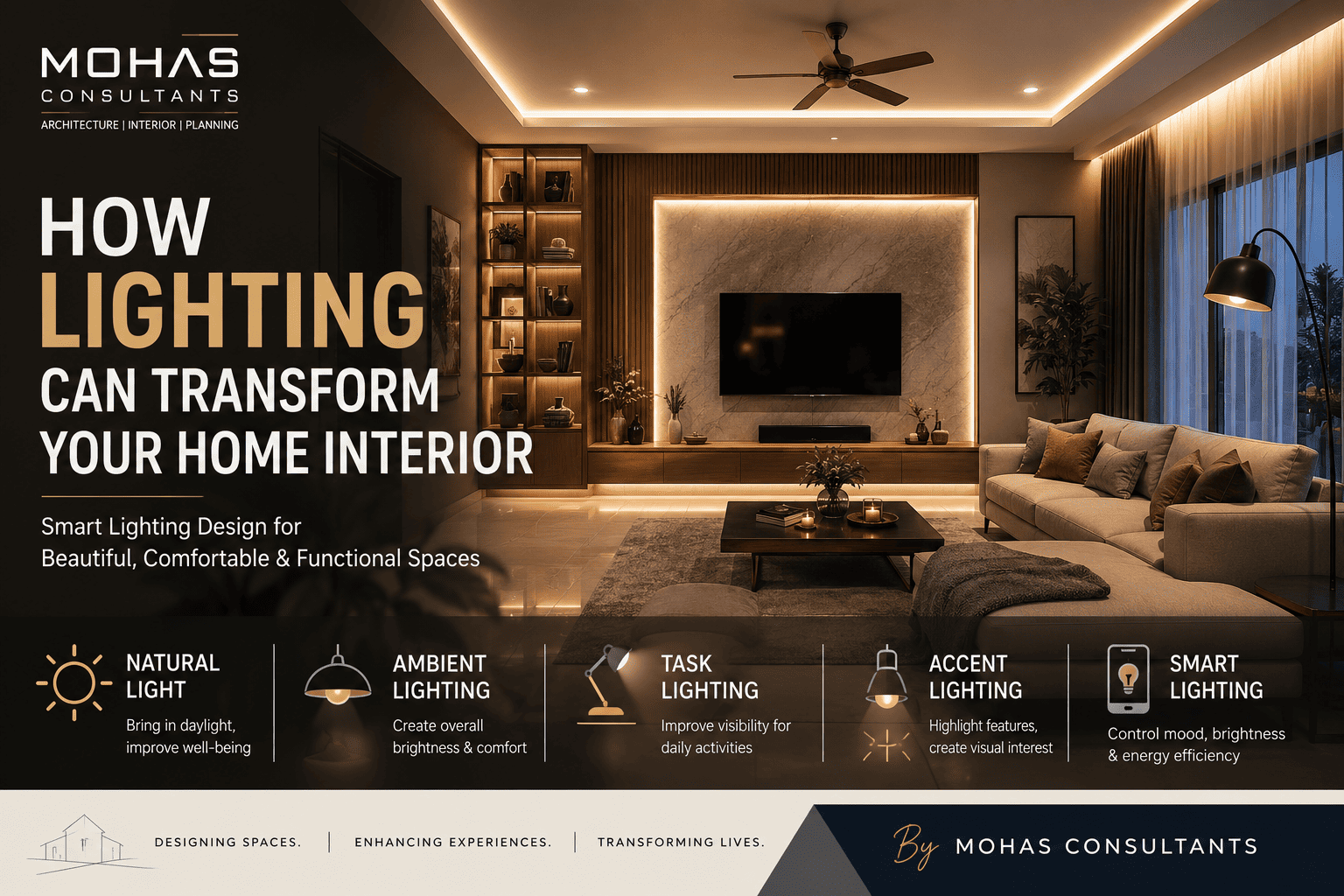
How Lighting Can Transform Your Home Interior
A Complete Interior Lighting Guide by Mohas Consultants
Lighting is one of the most powerful elements of interior design. It can completely transform the appearance, atmosphere, and functionality of a home. A beautifully designed interior may still feel dull, uncomfortable, or incomplete if the lighting is poorly planned. On the other hand, the right lighting design can make even a simple space feel warm, spacious, elegant, and visually appealing.
Lighting is not only about installing bulbs and fixtures. Professional interior lighting design considers how light interacts with architecture, colors, materials, furniture, and the people using the space.
At Mohas Consultants, we believe that lighting should be planned as an essential part of interior design from the beginning. A well-designed lighting scheme can improve comfort, highlight architectural features, create mood, and transform the overall character of your home.
Why Lighting Is Important in Interior Design

Lighting directly affects how we experience a space. It influences the brightness, visual size, atmosphere, and functionality of every room.

A properly designed lighting system can:
-
Make rooms appear larger and more open -
Create a warm and welcoming atmosphere -
Highlight architectural and interior features -
Improve functionality for daily activities -
Enhance colors, textures, and materials -
Create visual depth and balance -
Improve the overall appearance of furniture and décor -
Add a sense of luxury and sophistication
The best lighting design combines functionality and aesthetics. Every light source should have a purpose while also contributing to the overall visual composition of the interior.
1. Natural Lighting: The Foundation of a Beautiful Home

Natural light is one of the most important elements of residential architecture and interior design.
Sunlight can make spaces feel brighter, healthier, and more connected to the outdoors. Large windows, skylights, courtyards, and glass doors can introduce natural light into different areas of the home.
When designing a home, architects should carefully consider:
-
Building orientation -
Window size and placement -
Direction of sunlight -
Shading requirements -
Privacy -
Heat gain -
Interior layout
The goal is not simply to bring more sunlight into a house. It is to bring the right amount of natural light into the right spaces.
For example, excessive direct sunlight can create glare and increase indoor heat. Proper architectural planning can balance daylight with shading and thermal comfort.
2. Ambient Lighting: Creating Overall Illumination
Ambient lighting provides the general illumination required for comfortable movement and daily activities.
It is usually the primary layer of lighting in a room.
Common examples include:
-
Ceiling-mounted lights -
Recessed lights -
Chandeliers -
Cove lighting -
Indirect ceiling lighting
Ambient lighting should create an even and comfortable level of brightness without making the room feel harsh.

The intensity and color of ambient lighting should depend on the function of the space. A living room may require warm and comfortable lighting, while a kitchen or workspace may need brighter illumination.
3. Task Lighting: Improving Functionality

Task lighting is designed for specific activities.
It provides focused illumination where additional visibility is required.
Examples include:
-
Kitchen counter lighting -
Study desk lamps -
Reading lights -
Bathroom mirror lighting -
Wardrobe lighting
Task lighting improves comfort and functionality by providing sufficient illumination exactly where it is needed.
A well-designed home should not rely only on one central ceiling light. Different activities require different lighting conditions.
For example, reading, cooking, working, grooming, and relaxing all require different levels and directions of light.
4. Accent Lighting: Highlighting Design Features

Accent lighting is used to draw attention to specific architectural or interior elements.
It can highlight:
-
Feature walls -
Artwork -
Wall textures -
Decorative objects -
Shelves -
Architectural details -
Indoor plants -
Display cabinets
Accent lighting creates contrast and visual depth.
Without accent lighting, an interior can sometimes appear flat. Carefully positioned lighting can create shadows, layers, and focal points that make the space more visually interesting.
5. Layered Lighting: The Secret to a Professional Interior

One of the most effective approaches to interior lighting is layered lighting.
Layered lighting combines:
-
Ambient lighting – for overall illumination -
Task lighting – for specific activities -
Accent lighting – for visual interest and architectural emphasis
When these three layers are combined, a room becomes more flexible and visually balanced.
For example, a living room can use:
-
Recessed ceiling lights for general illumination -
Floor lamps for reading -
Wall lights for atmosphere -
LED strips to highlight a TV wall or ceiling detail
This allows homeowners to change the mood of the space depending on the time of day or activity.
6. Lighting Can Make Small Rooms Feel Larger

Proper lighting can significantly change the perceived size of a room.
Poor lighting can make a small room feel closed, dark, and uncomfortable. Strategic lighting can make the same space appear more open and spacious.
Some effective techniques include:
-
Using indirect lighting -
Illuminating walls instead of only the center of the room -
Using mirrors to reflect light -
Keeping corners properly illuminated -
Using light-colored interior finishes -
Introducing natural daylight
Wall washing and indirect ceiling lighting can visually expand the boundaries of a room.
This is especially useful in smaller bedrooms, apartments, bathrooms, and living spaces.
7. Lighting Can Change the Mood of Your Home

Different lighting conditions can create completely different emotional experiences.
Warm lighting can create a relaxing and welcoming environment, while brighter and more neutral lighting can support concentration and productivity.
For example:

Living Room

Warm and layered lighting can create a comfortable atmosphere for family gatherings and relaxation.

Bedroom

Soft and indirect lighting can create a calm and peaceful environment.

Kitchen

Bright task lighting improves visibility and makes food preparation easier.

Home Office

Balanced lighting can support concentration and reduce uncomfortable shadows.

Bathroom
Proper mirror lighting improves visibility while creating a clean and refined appearance.
Lighting should therefore be selected according to how each space will be used.
8. Highlighting Architectural Features

Lighting can dramatically improve architectural details.
A professionally planned lighting system can highlight:
-
Double-height spaces -
Ceiling designs -
Wall panels -
Textured finishes -
Staircases -
Niches -
Corridors -
Architectural columns
For example, concealed LED lighting can emphasize the depth of a false ceiling, while wall-mounted lights can highlight the texture of natural stone or decorative panels.
Lighting allows architectural features to remain visually noticeable even after daylight disappears.
9. Choosing the Right Color Temperature

Color temperature plays an important role in how a space feels.
Different types of light create different visual atmospheres.

Warm Lighting

Warm lighting creates a comfortable and relaxing environment. It is commonly used in:
-
Living rooms -
Bedrooms -
Dining spaces -
Decorative areas
Neutral Lighting
Neutral lighting provides a balanced appearance and is suitable for spaces requiring both comfort and visibility.

Cool Lighting

Cooler lighting is often used in areas requiring greater brightness and concentration.
However, the most suitable lighting temperature should be selected according to the overall interior concept and function of the room.
A professional lighting design should maintain consistency while allowing different spaces to have appropriate lighting conditions.
10. Smart Lighting for Modern Homes

Smart lighting is becoming an increasingly popular feature in modern residential design.
Smart lighting systems can allow homeowners to control:
-
Brightness -
Lighting scenes -
Timing -
Selected areas -
Mood settings
For example, a homeowner can create different lighting scenes for:
-
Morning -
Relaxation -
Entertainment -
Dining -
Movie nights -
Guests
This creates greater flexibility and allows the interior environment to adapt to different activities.
When integrated during the architectural and electrical planning stages, smart lighting can become a practical and valuable feature of a modern home.
Common Interior Lighting Mistakes to Avoid

Many homeowners select lighting fixtures after the interior work is completed. This can lead to poor positioning and unnecessary modifications.
Some common mistakes include:
Using Only One Central Light
A single ceiling fixture rarely provides sufficient lighting for an entire room.
Excessive Downlights
Installing too many recessed lights can make a ceiling look crowded and may create an uncomfortable environment.
Ignoring Task Lighting
Work areas such as kitchen counters, study desks, and bathroom mirrors require dedicated lighting.
Choosing Fixtures Only for Appearance
A beautiful fixture may not provide the correct amount or direction of light.
Poor Lighting Placement
Incorrect positioning can create glare, unwanted shadows, and uneven illumination.
Ignoring Natural Light
Artificial lighting should complement natural daylight rather than replace it completely.
Lighting Should Be Planned Before Construction

One of the most important aspects of a successful interior project is early planning.
Lighting positions should be coordinated with:
-
Furniture layouts -
Ceiling designs -
Electrical planning -
Architectural details -
Interior materials -
Mechanical systems
Planning lighting after construction can result in unnecessary changes, additional costs, and compromises in design.
At Mohas Consultants, lighting can be integrated into the architectural and interior design process to ensure that every fixture, switch, and lighting feature supports the overall design concept.
How Mohas Consultants Can Help Transform Your Interior

Every home has different architectural conditions, user requirements, and design preferences.
A professional lighting and interior design approach considers the complete space rather than selecting fixtures individually.
At Mohas Consultants, our approach focuses on combining:
-
Architectural planning -
Interior design -
Natural lighting -
Artificial lighting -
Space functionality -
Material selection -
Ceiling and wall design
The objective is to create interiors that look beautiful during both daytime and nighttime.
A successful lighting design should not only make a home brighter. It should improve how the home feels and how people experience each space.
Final Thoughts

Lighting has the power to completely transform a home interior.
It can make small spaces feel larger, highlight architectural details, improve functionality, and create a comfortable atmosphere. The right combination of natural, ambient, task, and accent lighting can turn an ordinary interior into a carefully designed living environment.
The most successful lighting designs are planned from the beginning and integrated with architecture and interior design.
Whether you are designing a new home or renovating an existing interior, professional lighting planning can make a significant difference in the final result.

Transform Your Home Interior with Mohas Consultants

If you are planning a new residential project or renovating your existing home, Mohas Consultants can help you create a functional, visually balanced, and professionally designed interior.
From architectural planning and interior design to lighting concepts and space optimization, our approach focuses on creating spaces that reflect your lifestyle and design vision.
Contact Mohas Consultants to transform your home into a beautifully designed, comfortable, and inspiring living space.
Related Articles
Interior Architecture & Space Planning
Open Kitchen vs Closed Kitchen: Which Design is Better for Modern Homes? (2026 Guide) | Mohas Consultants
Jun 02, 2026

Interior Architecture & Space Planning
How to Choose the Right Interior Design Style for Your Dream Home | Mohas Consultants
Apr 11, 2026
Interior Architecture & Space Planning
Interior Design Trends for Modern Homes 2026 | Mohas Consultants
Apr 10, 2026