Lighting Design in Architecture: Expert Tips & Innovative Ideas for Modern Spaces |Mohas Consultants
Admin
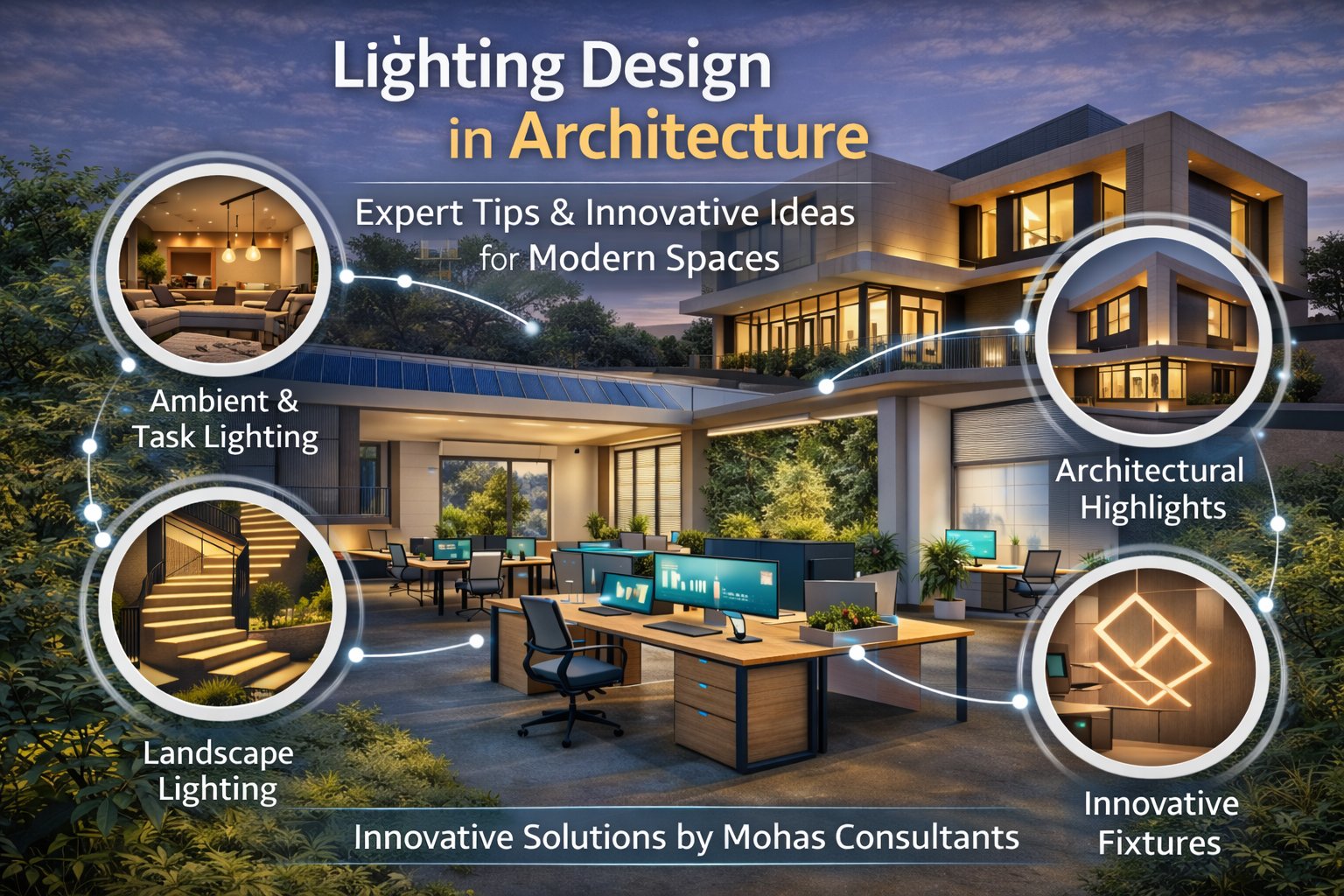
Lighting Design in Architecture
1. Introduction
Lighting is more than just illumination—it shapes how we experience a space. Whether designing a home, office, or public building, smart lighting choices enhance functionality, aesthetics, and comfort. In this guide, we’ll explore essential lighting design tips and innovative ideas to elevate your architecture projects.
2. Understanding the Types of Lighting
a) Natural Lighting
-
Harness daylight through windows, skylights, and atriums.
-
Benefits: reduces energy costs, improves mood, and creates a connection with the outdoors.
b) Artificial Lighting
-
Ambient Lighting: General illumination for the entire space.
-
Task Lighting: Focused lighting for activities like reading or cooking.
-
Accent Lighting: Highlights architectural features, artwork, or textures.
3. Key Principles of Lighting Design
-
Balance: Avoid areas that are too bright or too dark.
-
Layering: Combine ambient, task, and accent lighting for depth.
-
Functionality: Match lighting to the space’s purpose.
-
Aesthetics: Use light to enhance the architecture and design style.
4. Innovative Lighting Ideas for Modern Architecture
-
Smart Lighting: Automated systems that adjust brightness and color.
-
LED & Energy-Efficient Solutions: Reduce energy consumption without compromising style.
-
Highlight Architectural Features: Use accent lighting to emphasize textures, walls, or unique design elements.
-
Outdoor & Landscape Lighting: Illuminate pathways, facades, and gardens to create ambiance.
5. Common Mistakes to Avoid
-
Placing lights without planning the space layout.
-
Overusing harsh or bright lights.
-
Ignoring opportunities for natural light.
-
Choosing lighting without considering scale, materials, or style.
6. Tips for Different Spaces
-
Residential: Layered lighting for cozy living areas; functional task lighting in kitchens and bathrooms.
-
Commercial: Bright, productive workspaces; accent lighting in lobbies and conference rooms.
-
Outdoor Spaces: Soft pathway lighting, façade illumination, and garden accents to create a welcoming atmosphere.
7. Conclusion
Lighting transforms spaces—enhancing beauty, functionality, and comfort. By combining natural and artificial lighting thoughtfully, architects can create environments that are practical, energy-efficient, and visually stunning.
Call-to-Action (CTA):
"Looking to elevate your next architectural project with expert lighting design? Contact Mohas Consultants today and bring your spaces to life!"
Related Articles
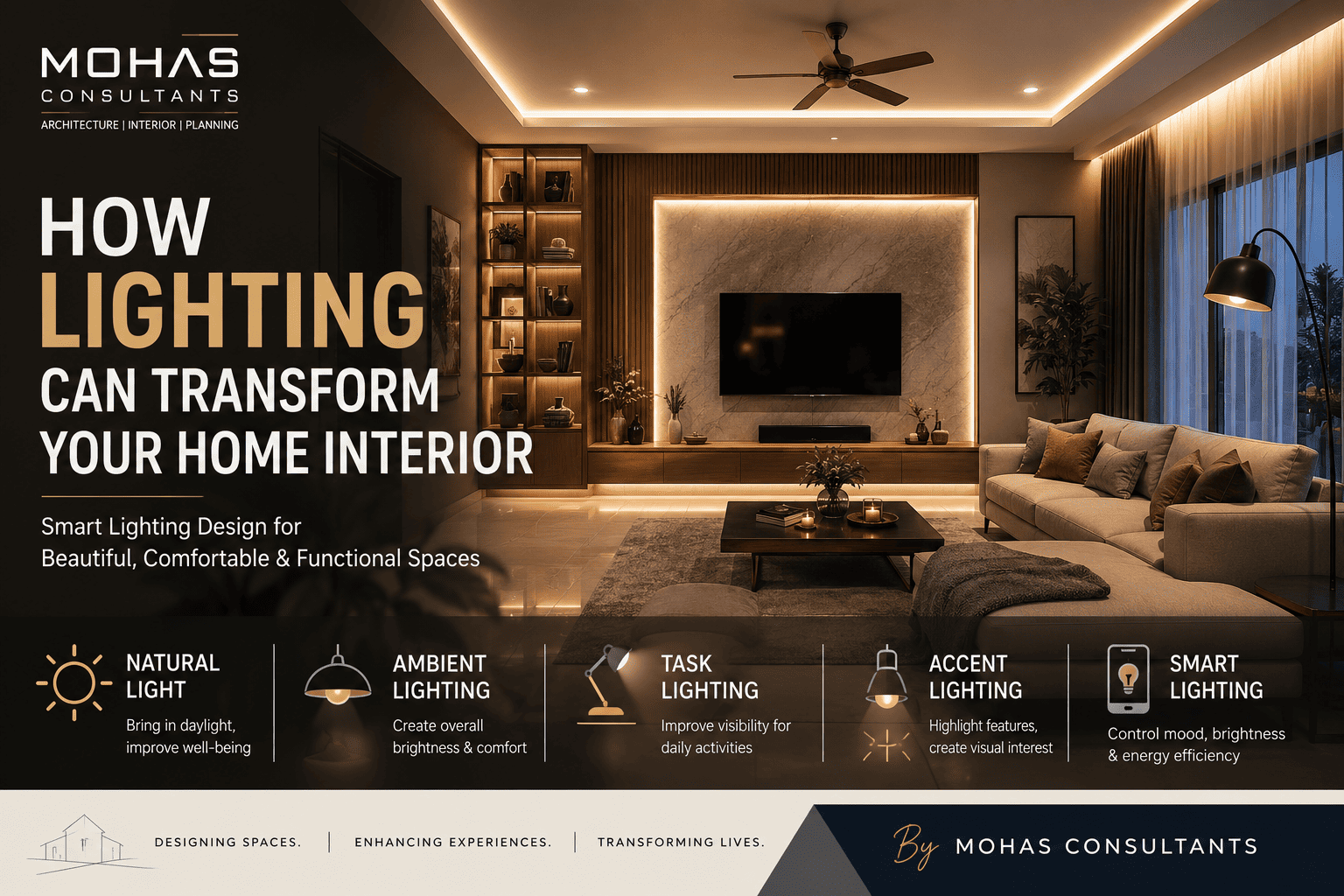
Interior Architecture & Space Planning
How Lighting Can Transform Your Home Interior | Mohas Consultants
Sep 02, 2026
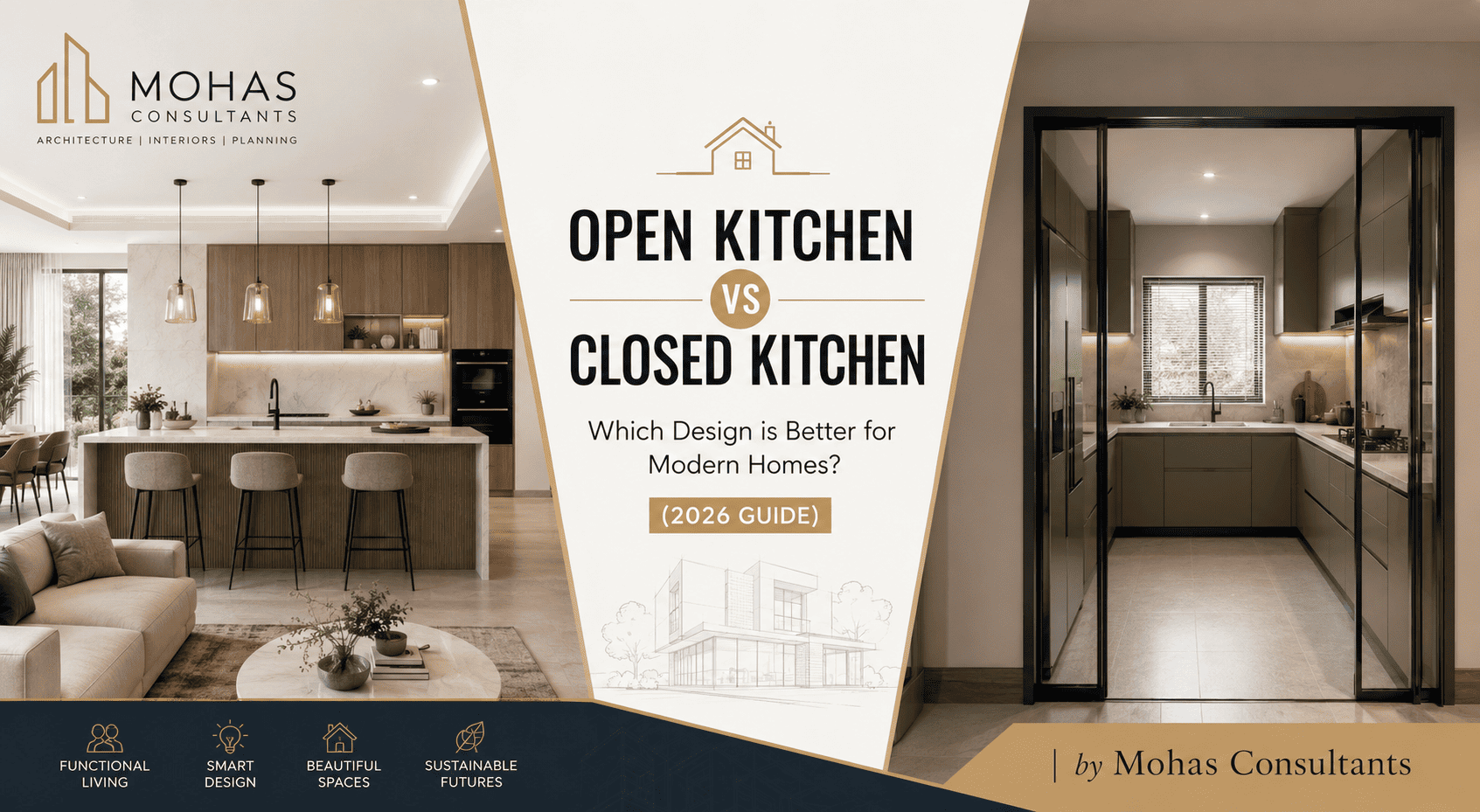
Interior Architecture & Space Planning
Open Kitchen vs Closed Kitchen: Which Design is Better for Modern Homes? (2026 Guide) | Mohas Consultants
Jun 02, 2026

Interior Architecture & Space Planning
How to Choose the Right Interior Design Style for Your Dream Home | Mohas Consultants
Apr 11, 2026