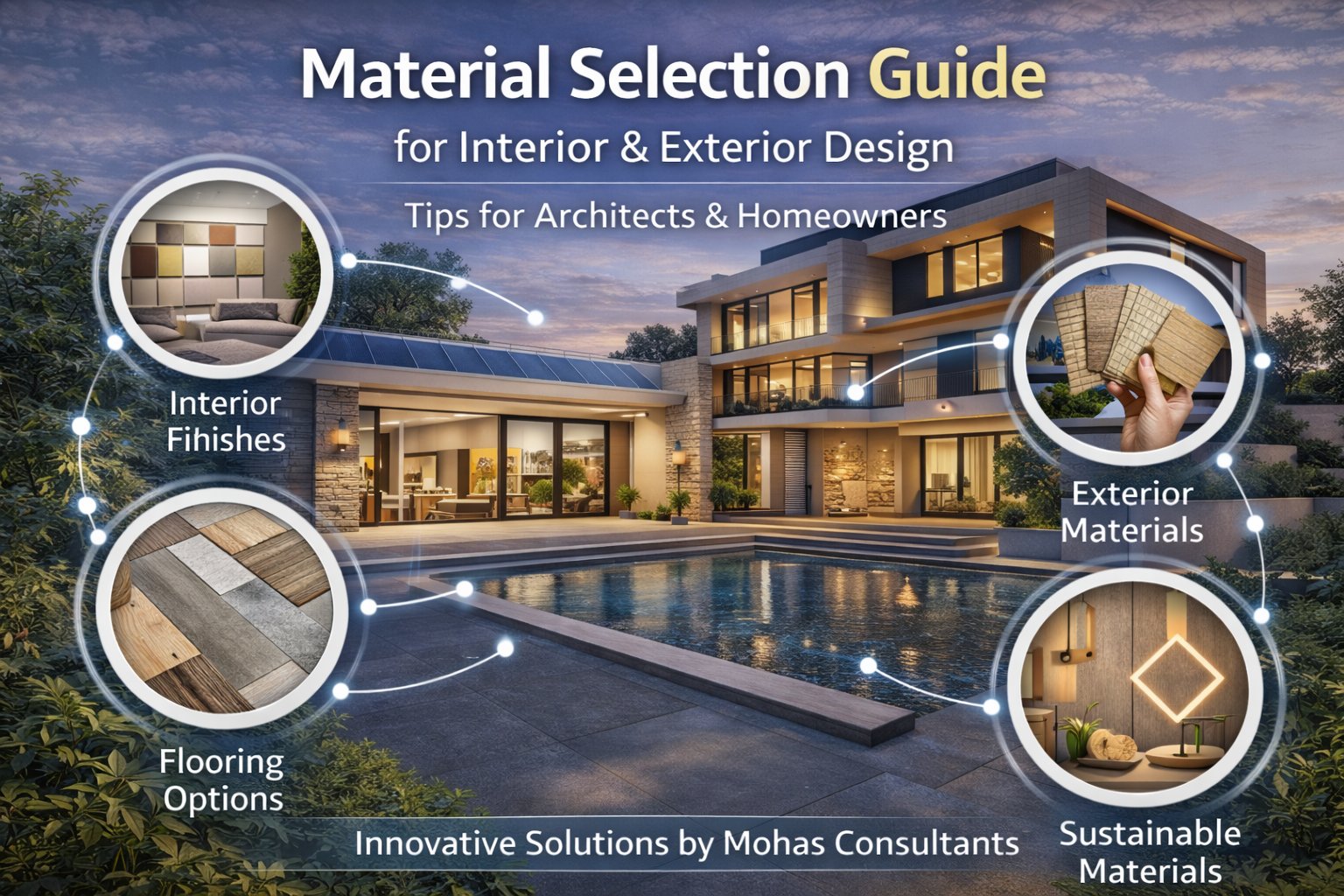
Material Selection Guide for Interior & Exterior Design: Tips for Architects & Homeowners | Mohas Consultants
Admin
Introduction
Selecting the right materials is one of the most critical decisions in architecture. The materials you choose impact not only the look and feel of a space but also its durability, functionality, and sustainability. Whether you’re designing a home, office, or commercial building, understanding how to choose the right materials is key to creating long-lasting and aesthetically pleasing spaces. In this guide, we’ll explore expert tips for selecting materials for both interior and exterior design.
Factors to Consider When Choosing Materials
Before deciding on materials, consider the following factors:
-
Durability: Ensure the material can withstand daily use and environmental conditions.
-
Aesthetics: Consider colors, textures, and finishes that complement your design style.
-
Maintenance: Evaluate how easy the material is to clean and maintain over time.
-
Sustainability: Choose eco-friendly, recyclable, or low-impact materials.
-
Cost: Balance quality, appearance, and budget constraints.
Interior Material Selection
1. Flooring
-
Wood: Timeless, warm, and versatile; ideal for living rooms and bedrooms.
-
Tiles: Durable, water-resistant, and easy to clean; perfect for kitchens and bathrooms.
-
Carpet: Soft and insulating, suitable for bedrooms and lounges.
2. Walls & Surfaces
-
Paint: Cost-effective, with endless color and finish options.
-
Wallpaper: Adds texture, pattern, and style to walls.
-
Cladding & Panels: Wood, stone, or metal panels create accent walls and visual interest.
3. Furniture & Fixtures
-
Wood, Metal, or Glass: The choice of material affects both durability and style.
-
Upholstery: Fabric or leather options should match lifestyle needs and maintenance preferences.
Exterior Material Selection
1. Facades & Cladding
-
Stone & Brick: Durable, weather-resistant, and adds texture.
-
Metal: Provides a modern, sleek look with high longevity.
-
Composite Materials: Lightweight, sustainable, and highly versatile for modern designs.
2. Roofing & Outdoor Spaces
-
Tiles & Shingles: Long-lasting, weather-resistant, and available in various styles.
-
Concrete: Ideal for patios, walkways, and minimalist designs.
-
Wood Decking: Natural and warm but requires regular maintenance.
Sustainability and Eco-Friendly Materials
Incorporating sustainable materials is increasingly important:
-
Recycled or Reclaimed Materials: Wood, metal, or stone from previous projects.
-
Low-VOC Paints and Finishes: Improve indoor air quality for interiors.
-
Bamboo, Cork, and FSC-Certified Wood: Renewable and eco-friendly options.
-
Energy-Efficient Solutions: Insulated panels, reflective roofing, and durable exterior materials.
Common Mistakes in Material Selection
-
Choosing materials solely for aesthetics without considering durability.
-
Ignoring local climate and environmental conditions.
-
Overlooking maintenance costs and long-term usability.
-
Mixing incompatible materials that may degrade or wear unevenly.
Tips for a Cohesive Design
-
Ensure harmony between interior and exterior materials.
-
Balance textures, colors, and finishes for a unified look.
-
Use materials to highlight architectural features.
-
Integrate sustainability without compromising style.
Conclusion
Material selection is fundamental to designing spaces that are functional, visually appealing, and sustainable. Thoughtful choices in interior and exterior materials help create architectural projects that stand the test of time while reflecting modern design trends.
Call-to-Action:
"Need expert guidance on material selection for your next project? Contact Mohas Consultants today and bring your vision to life!"
Related Articles

Interior Architecture & Space Planning
How Lighting Can Transform Your Home Interior | Mohas Consultants
Sep 02, 2026
Interior Architecture & Space Planning
Open Kitchen vs Closed Kitchen: Which Design is Better for Modern Homes? (2026 Guide) | Mohas Consultants
Jun 02, 2026

Interior Architecture & Space Planning
How to Choose the Right Interior Design Style for Your Dream Home | Mohas Consultants
Apr 11, 2026