Passive Cooling Techniques for Hot Climates | Mohas Consultants
Admin

Passive Cooling Techniques for Hot Climates | Mohas Consultants
Intro
In hot climate regions like Pakistan, rising temperatures and increasing energy costs make indoor comfort a major challenge. Traditional air-conditioning systems consume excessive electricity and increase carbon emissions, putting pressure on both the environment and household budgets.
At Mohas Consultants, we believe in designing intelligent, climate-responsive buildings that stay naturally cool, comfortable, and energy-efficient. By using passive cooling techniques, architects can significantly reduce heat gain, improve indoor comfort, and minimize dependence on mechanical cooling systems.
This blog explores the most effective passive cooling strategies for hot climates and how smart architectural design can transform your living and working spaces.
Problem: Why Hot Climates Demand Smarter Architectural Design
Hot and arid regions face several architectural challenges:
-
Extreme summer temperatures
-
High energy consumption for cooling
-
Rising electricity costs
-
Increased carbon footprint
-
Poor indoor thermal comfort
Conventional buildings often trap heat, forcing occupants to rely heavily on air conditioners. This results in high operational costs, uncomfortable indoor environments, and environmental degradation.
Without proper design strategies, buildings become heat boxes, especially in dense urban areas. That’s why passive cooling architecture is no longer optional — it is essential.
Solution: Effective Passive Cooling Techniques for Hot Climates
Passive cooling focuses on design strategies that reduce heat gain and enhance natural cooling without mechanical systems. Below are the most effective methods used by Mohas Consultants in sustainable architectural projects:
1. Orientation & Site Planning
Proper building orientation minimizes direct sun exposure. Aligning structures to reduce east-west sun penetration dramatically lowers indoor temperatures.
2. Natural Ventilation Design
Cross ventilation, stack effect, and strategically placed openings allow hot air to escape and cool air to circulate naturally.
3. Courtyard Planning
Central courtyards create shaded microclimates that lower indoor temperature and improve airflow throughout the building.
4. Shading Devices
Deep overhangs, pergolas, louvers, and vertical fins block direct sunlight while allowing daylight penetration.
5. Thermal Mass Utilization
Using materials like brick, concrete, and stone helps absorb heat during the day and release it slowly at night.
6. Green Roofs & Vertical Gardens
Vegetation reduces surface temperatures, improves air quality, and enhances thermal comfort.
7. High-Performance Building Envelope
Insulated walls, reflective roofing, and energy-efficient glazing prevent heat transfer and solar gain.
Visual Examples: Passive Cooling Architecture in Action
Passive cooling strategies are beautifully demonstrated in:
-
Courtyard homes with shaded transitional spaces
-
Wind-catcher inspired ventilation systems
-
Perforated facades for airflow & shading
-
Green rooftops and landscaped terraces
-
Deep recessed windows and verandahs
These design elements not only enhance thermal comfort but also create aesthetically pleasing architectural spaces that reflect modern sustainable living.
Design Tips for Homeowners & Developers
Here are expert recommendations from Mohas Consultants for achieving optimal passive cooling:
-
Choose light-colored exterior finishes to reflect sunlight
-
Use double-glazed windows and thermal insulation
-
Integrate indoor-outdoor transitional spaces
-
Design shaded outdoor sitting areas
-
Prioritize natural airflow paths in floor planning
-
Plant native trees for external shading
These simple yet effective strategies can reduce indoor temperatures by 5–8°C naturally.
Conclusion
Passive cooling is the foundation of sustainable architecture in hot climates. By integrating climate-responsive design principles, buildings become comfortable, cost-efficient, environmentally friendly, and future-ready.
At Mohas Consultants, we specialize in crafting innovative architectural solutions that balance aesthetics, functionality, and sustainability. Our designs ensure that every space performs efficiently while providing exceptional comfort and visual appeal.
CTA – Let’s Design Smarter Together
Looking to build a modern, energy-efficient, and climate-responsive home or commercial project?
👉 Contact Mohas Consultants today and let our expert architects design a naturally cool, sustainable, and beautiful space tailored to your needs.
Related Articles
Sustainable & Green Architecture
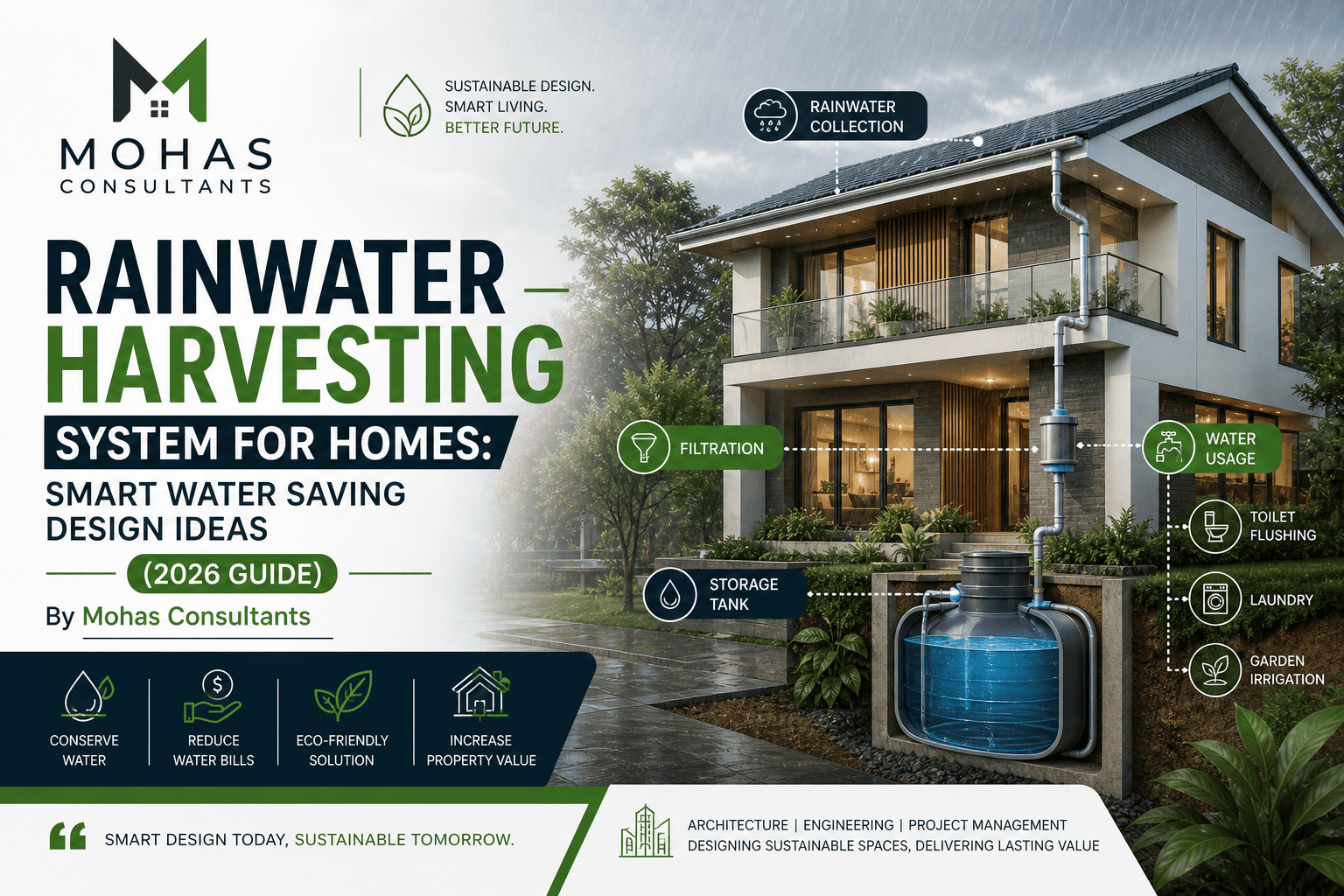
Rainwater Harvesting System for Homes: Smart Water Saving Design Ideas (2026 Guide) | Mohas Consultants
May 06, 2026
Sustainable & Green Architecture
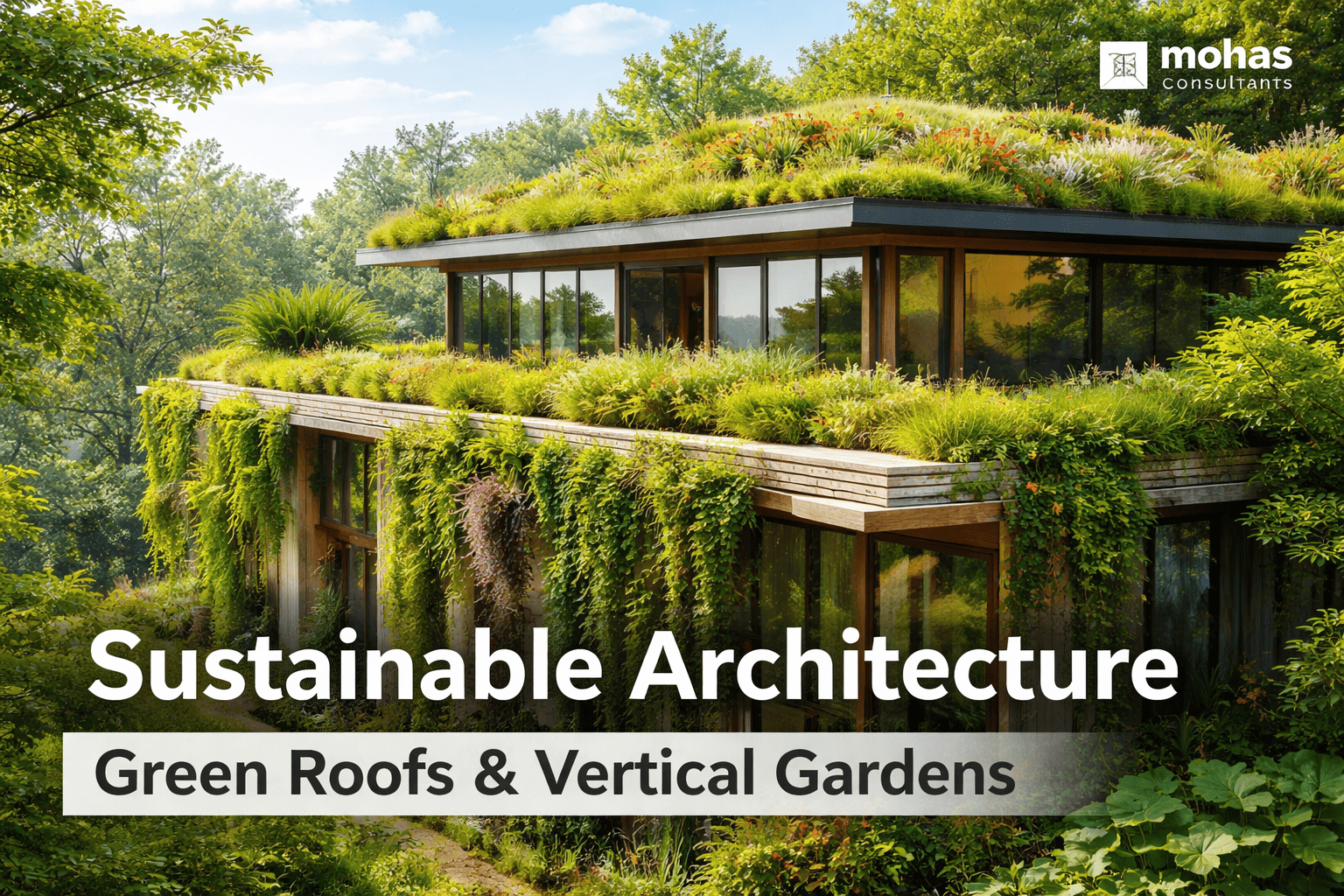
Sustainable Architecture: Green Roofs & Vertical Gardens | Mohas Consultants
Feb 28, 2026

Sustainable & Green Architecture
Biophilic Design: Nature in Modern Architecture | Mohas Consultants
Feb 28, 2026