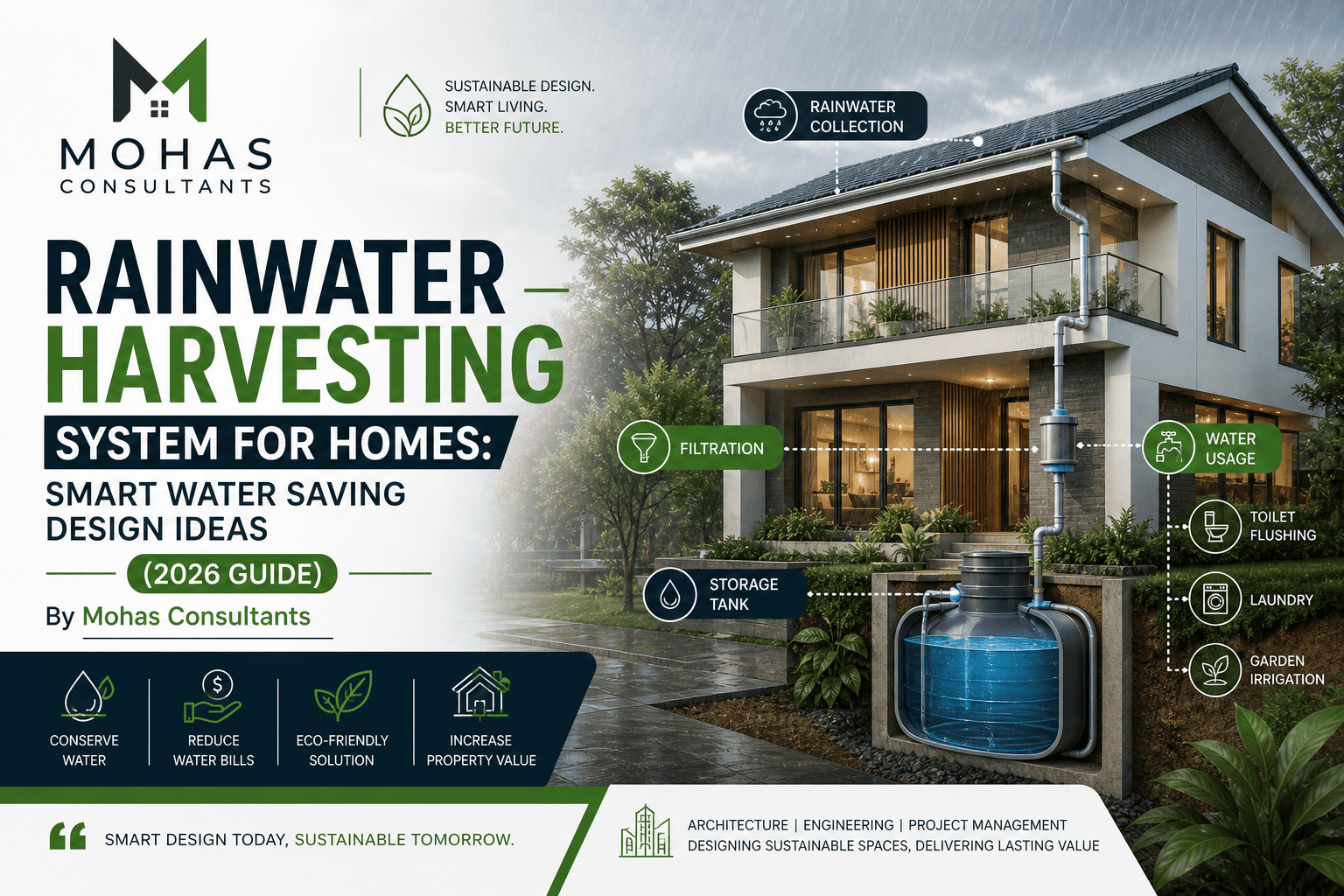
🌧️ Rainwater Harvesting System for Homes | Mohas Consultants
Water scarcity is becoming a serious concern in many cities of Pakistan. Rising demand, groundwater depletion, and irregular water supply have made it important for homeowners to adopt sustainable water solutions. One of the most effective and eco-friendly methods is a Rainwater Harvesting System.
At Mohas Consultants, we integrate smart architectural planning with sustainable systems like rainwater harvesting to create future-ready homes that are efficient, cost-effective, and environmentally responsible.
💧 What is a Rainwater Harvesting System?
A rainwater harvesting system is a method of collecting, storing, and reusing rainwater that falls on rooftops or open surfaces. Instead of letting rainwater go to waste through drains, it is directed into storage tanks or underground reservoirs for later use.
🏡 Why Rainwater Harvesting is Important for Homes
Installing a rainwater harvesting system is not just a trend—it is a necessity for sustainable living.
Key benefits include:
- Reduces dependency on municipal water supply
- Lowers monthly water bills
- Helps recharge groundwater levels
- Provides backup water during shortages
- Environmentally friendly and sustainable solution
🏗️ How Rainwater Harvesting Works
A properly designed system follows a simple but efficient process:
1. Collection
Rainwater is collected from rooftops, terraces, and paved surfaces.
2. Filtration
Leaves, dust, and debris are filtered using a mesh or filtration unit.
3. Storage
Clean water is stored in tanks or underground reservoirs.
4. Distribution
Stored water is reused for:
- Gardening
- Washing cars
- Cleaning outdoor areas
- Toilet flushing (in advanced systems)
🧱 Types of Rainwater Harvesting Systems for Homes
1. Rooftop Rainwater Harvesting System
The most common system where roof water is directed into storage tanks.
2. Surface Runoff System
Collects rainwater from driveways, lawns, and open spaces.
3. Recharge Pit System
Used to recharge underground water levels through filtration pits.
🏠 Design Considerations for Homes
At Mohas Consultants, we ensure rainwater systems are integrated into the building design for maximum efficiency.
Important design factors include:
- Roof slope and drainage planning
- Proper pipe sizing and placement
- Filtration system design
- Storage tank capacity based on rainfall
- Waterproofing of storage areas
🌿 Benefits in Pakistani Climate
In regions like Karachi, Lahore, and other urban areas, rainwater harvesting is especially useful due to seasonal rainfall patterns.
Local advantages:
- Reduces load on water supply systems
- Helps during summer shortages
- Supports gardening in dry seasons
- Reduces urban flooding risks
⚡ Cost vs Long-Term Savings
While installation requires initial investment, the long-term benefits are significant:
- Lower water bills over time
- Reduced dependency on tanker water
- Increased property value
- Sustainable living advantage
🧠 Why Architects Should Plan It Early
Rainwater harvesting is most effective when planned during the design stage of a building. Retrofitting is possible but less efficient.
At Mohas Consultants, we design:
- Integrated drainage systems
- Underground storage planning
- Sustainable landscape integration
- Smart water management systems
🌍 Final Thoughts
Rainwater harvesting is one of the simplest yet most powerful ways to make a home sustainable. It not only reduces water costs but also contributes to environmental conservation and long-term resource management.
A well-designed system ensures that every drop of rain is used wisely.
📞 Build a Sustainable Home with Mohas Consultants
If you are planning a new home or want to upgrade your existing building, Mohas Consultants can help you integrate smart rainwater harvesting and sustainable architectural solutions into your design.
👉 Contact us today for modern, eco-friendly architectural planning and construction services.