Sustainable Architecture: Green Roofs & Vertical Gardens | Mohas Consultants
Admin
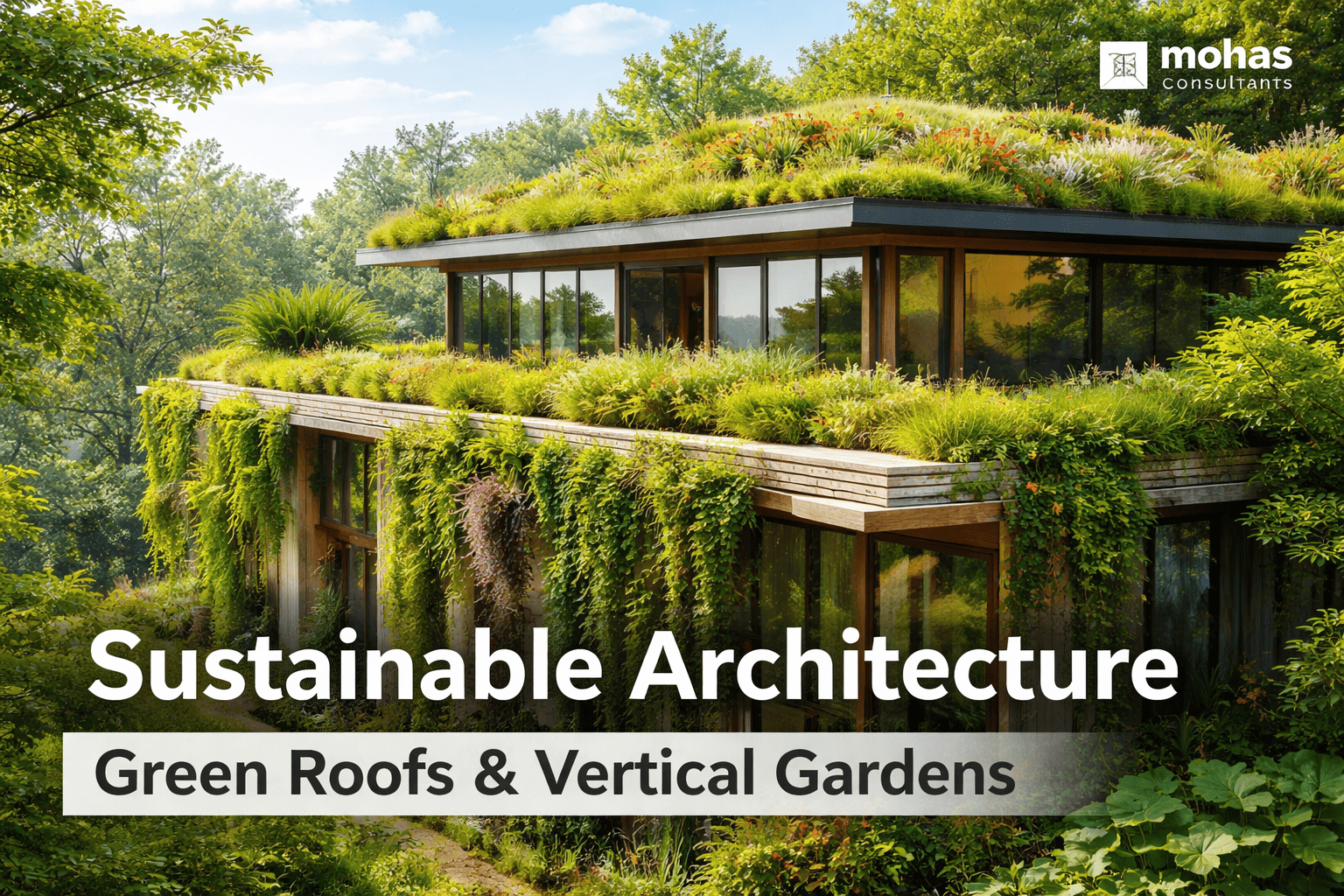
Green Roofs, Vertical Gardens & Urban Farming | Mohas Consultants
Introduction
As cities grow denser and temperatures continue to rise, architecture is evolving beyond aesthetics toward environmental responsibility. Modern buildings are no longer just structures — they are becoming living ecosystems.
At Mohas Consultants, we believe sustainable architecture must reconnect urban life with nature. Green roofs, vertical gardens, and urban farming are transforming how buildings function by improving climate performance, enhancing wellbeing, and creating self-sustaining environments within cities.
The Problem: Urban Heat, Pollution & Loss of Green Space
Rapid urbanization across Pakistan has created several environmental challenges:
-
Increasing urban heat island effect
-
Poor air quality and rising pollution levels
-
Reduced natural green areas
-
Higher indoor cooling costs
-
Limited access to fresh food in dense neighborhoods
Traditional construction replaces soil and vegetation with concrete and asphalt, trapping heat and reducing ecological balance. Buildings consume more energy while cities become less livable.
Architecture must now respond with climate-conscious solutions.
The Solution: Nature-Integrated Architecture
1. Green Roofs
Green roofs introduce vegetation on rooftops, turning unused surfaces into functional landscapes.
Benefits include:
-
Reduced indoor temperatures
-
Improved roof insulation
-
Rainwater absorption
-
Extended roof lifespan
-
Enhanced biodiversity
In hot climates like Pakistan, green roofs significantly reduce solar heat gain, lowering dependence on air conditioning.
2. Vertical Gardens
Vertical gardens (living walls) bring greenery into compact urban environments where horizontal space is limited.
Key advantages:
-
Natural cooling through evapotranspiration
-
Improved air quality
-
Acoustic insulation
-
Visual enhancement of facades
-
Psychological wellbeing for occupants
They work especially well on west-facing walls exposed to intense afternoon sun.
3. Urban Farming
Urban farming integrates food production into residential and commercial buildings.
Examples include:
-
Rooftop vegetable gardens
-
Balcony farming systems
-
Community terrace farms
-
Hydroponic installations
Urban farming promotes sustainability while reconnecting residents with food production and seasonal cycles.
Visual Examples in Architecture
Modern climate-responsive projects often combine all three strategies:
-
Residential homes with rooftop herb gardens
-
Office buildings featuring green façade systems
-
Courtyard houses integrating vertical planting walls
-
Apartment complexes with shared farming terraces
Materials like exposed brick, concrete textures, pergolas, and shaded walkways complement greenery while maintaining contemporary aesthetics.
Design Tips from Mohas Consultants
✔ Choose native plants suited to local climate conditions
✔ Plan irrigation systems using recycled or rainwater
✔ Design structural load capacity early for green roofs
✔ Use layered planting for thermal insulation
✔ Orient greenery toward harsh sun exposure
✔ Combine shading devices with vegetation for maximum cooling
✔ Ensure easy maintenance access
Good design balances beauty, performance, and long-term practicality.
Conclusion
Green roofs, vertical gardens, and urban farming are not luxury features — they are essential tools for future-ready architecture. These strategies reduce environmental impact while improving comfort, health, and building efficiency.
As cities in Pakistan continue to expand, integrating nature into architecture will define sustainable urban living.
Call to Action (CTA)
Ready to design a greener and more sustainable building?
Mohas Consultants specializes in climate-responsive architecture, energy-efficient planning, and nature-integrated design solutions tailored for modern lifestyles.
👉 Contact Mohas Consultants today to transform your project into a sustainable architectural landmark.
Related Articles
Sustainable & Green Architecture
Rainwater Harvesting System for Homes: Smart Water Saving Design Ideas (2026 Guide) | Mohas Consultants
May 06, 2026
Sustainable & Green Architecture
Biophilic Design: Nature in Modern Architecture | Mohas Consultants
Feb 28, 2026
Sustainable & Green Architecture
Passive Cooling Techniques for Hot Climates | Mohas Consultants
Feb 12, 2026